Your Brain Already Knows How to Sort Information Instantly — So Why Are Your Study Habits Working Against It?
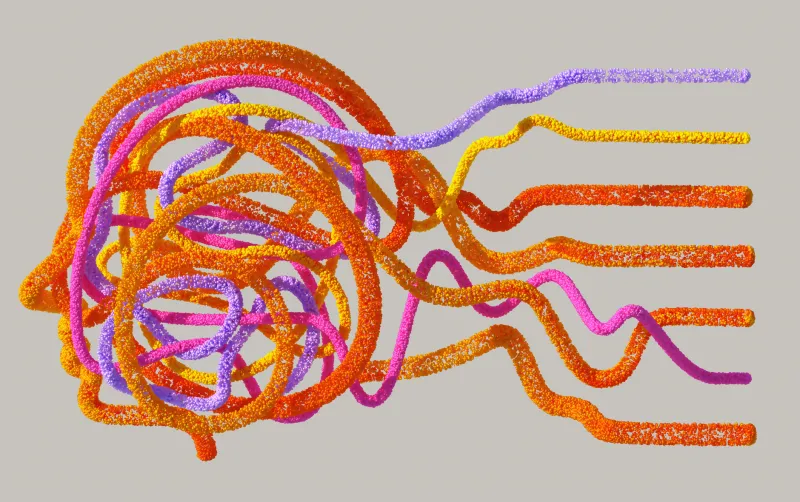
The Sorting Machine You Never Knew You Had
Right now, without any conscious effort, your brain is grouping, tagging, and filing everything it encounters. The color of your coffee mug. The tone of a coworker's voice. The structure of a sentence you just read. All of it gets categorized in milliseconds — long before your conscious mind even registers what happened.
This isn't a quirk. It's a core survival feature. Your brain evolved to find patterns and organize information at blinding speed because, for most of human history, recognizing "that shape is a predator" before you fully processed what you were seeing was the difference between life and death.
Fast-forward to a college dorm room in Ohio or a kitchen table in suburban Texas where a student is color-coding flashcards in alphabetical order, and something has gone seriously sideways. That student is using an organizational system that their brain finds almost completely meaningless — and neuroscience has a lot to say about why.
What's Actually Happening When Your Brain Categorizes
The process starts in a region called the perirhinal cortex, which acts like a rapid-fire familiarity detector. Within milliseconds of encountering new information, your brain is already asking: Does this connect to something I already know? Does this fit a pattern I recognize?
From there, the hippocampus steps in to start building associative links — essentially asking, where does this live in the web of everything I've already learned? The stronger and more meaningful those connections are, the more likely the information is to stick around long-term.
Here's the key word: meaningful. Your brain doesn't care that "mitochondria" comes before "myelin" alphabetically. It cares about function. It cares about cause and effect. It cares about stories, analogies, and relationships between ideas.
When you organize your study material in ways that mirror how the brain naturally groups information — by concept, by causal relationship, by real-world application — you're essentially speaking your brain's native language. When you organize it by chapter number or color-coded category with no conceptual logic behind it, you're forcing your brain to do extra translation work every single time it tries to retrieve that information.
Why Traditional Study Methods Create Friction
Most school-based study systems are inherited from a time when information management meant physical filing cabinets and textbook chapters. Chronological order made sense when you were working with paper. Alphabetical order was practical when you needed to find things in an index.
But your brain doesn't have an index. It has a network.
Think about how you actually remember things. You don't remember "the third item on a list you made last Tuesday." You remember something because it surprised you, because it connected to something personal, because it explained a mystery you'd been sitting with. Memory is fundamentally associative — it's a web of relationships, not a filing cabinet of isolated facts.
When students memorize vocabulary words in alphabetical order, or review history events in strict chronological sequence without connecting them to broader themes, they're essentially loading data into a format the brain wasn't built to use. Retrieval becomes harder. Forgetting happens faster. The whole process feels like pushing a boulder uphill, and most students just assume they're bad at studying.
They're not bad at studying. They're just using the wrong architecture.
Studying With Your Brain's Own Logic
So what does brain-aligned organization actually look like in practice?
Concept mapping over linear notes. Instead of writing bullet points down a page, try drawing relationships between ideas. Put a central concept in the middle and branch out to related ideas, causes, effects, and examples. This mirrors how your hippocampus actually stores information — as a network, not a list.
Grouping by function or principle, not by surface features. If you're studying biology, don't group "organelles" just because they all appear in the same chapter. Group "energy-producing structures" together, then "structures involved in protein synthesis," then "structures responsible for waste management." Your brain finds functional categories far more intuitive than arbitrary textbook groupings.
Using narrative and analogy. Your brain is obsessed with stories. Always has been. When you frame information as a story — cause leads to effect, problem leads to solution, character faces obstacle — retention skyrockets. Analogies work similarly. Explaining the immune system as "the body's own military" gives your brain a pre-existing framework to hang new information on.
Chunking by meaning, not by quantity. "Chunking" is a well-documented memory strategy, but the key is that chunks need to be meaningful groupings, not just arbitrary sets of seven items. Grouping the causes of World War I by category (political, economic, social, military) is chunking that works with your brain. Grouping them as "the first five causes" is just... a number.
The Deeper Point About How You Learn
There's something almost frustrating about all of this, once you see it clearly. The brain is doing this sophisticated, lightning-fast organizational work constantly — and most standardized study advice essentially ignores it.
The good news is that once you start working with your brain's categorization instincts instead of against them, studying starts to feel different. Less like grinding and more like... building something. Concepts start connecting on their own. You start anticipating what a professor might ask before they ask it, because you understand the structure of the material, not just the surface facts.
That's the shift that separates students who feel like they're always catching up from students who feel genuinely in command of what they're learning.
A Quick Way to Start Right Now
Before your next study session, try this: take whatever topic you're working on and ask yourself, if I had to explain the relationship between these ideas to a curious ten-year-old, what categories would I naturally use?
Not the categories from the textbook. Not the chapter headings. Your own natural groupings based on what connects to what.
Chances are, those categories will map much more closely to how your brain actually wants to file the information — and your retention will reflect that.
Your brain is already one of the most sophisticated pattern-recognition systems on the planet. The best thing you can do as a learner is stop fighting it and start following its lead.