Your Brain Isn't Storing What You Read — Here's the Neuroscience Fix That Changes Everything
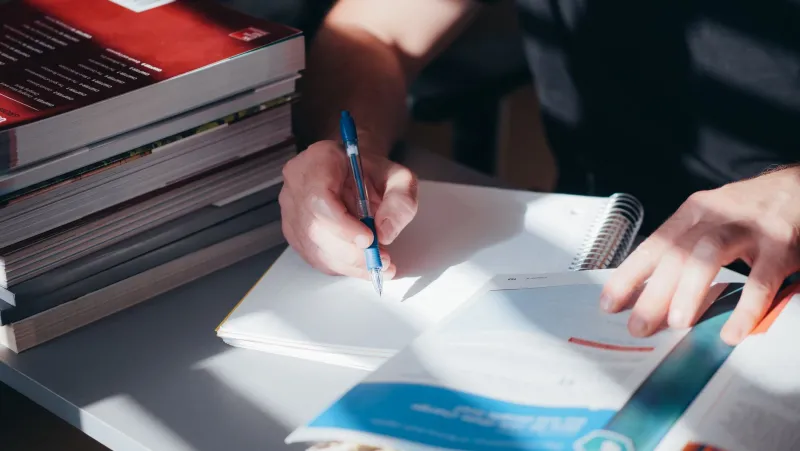
You sit down, read ten pages, maybe even highlight a few sentences in bright yellow, and then close the book feeling pretty good about yourself. Productive, right? Then your professor asks about it the next day, and it's like the words evaporated. You're not alone — and you're definitely not broken. What's actually happening is a collision between how most people think learning works and how the brain actually processes information.
Let's break that down.
The Illusion of Knowing
There's a sneaky cognitive phenomenon called the fluency illusion, and it's probably the biggest reason your reading sessions feel productive but aren't. When you re-read a passage or trace over your own highlights, the material feels familiar. Familiarity feels like knowledge. But your brain is essentially running a cheat code — it's recognizing patterns without actually encoding the information into long-term memory.
Researchers at Purdue University found that students who re-read material scored significantly lower on delayed recall tests compared to students who used active recall strategies. Re-reading is comfortable. It's low-effort. And it gives you a warm, fuzzy sense of accomplishment that has almost nothing to do with actual retention.
Highlighting? Same trap. A 2013 review published in Psychological Science in the Public Interest evaluated ten common study techniques and ranked highlighting and underlining as having low utility for long-term learning. You're essentially just decorating the page.
What's Actually Happening in Your Brain When You Read
Here's where it gets genuinely fascinating. When you read passively — eyes moving across lines, maybe with some background music playing — your brain's hippocampus (the region responsible for forming new memories) doesn't get much of a workout. Information passes through your working memory, which has a painfully limited capacity, and then largely dissolves.
Think of working memory like a sticky note on your fridge. It holds a couple of things at once, temporarily, and then gets replaced. Long-term memory is more like carving something into stone — it takes effort, repetition, and the right conditions.
For a memory to transfer from that sticky note to the carved stone, your brain needs to go through a process called memory consolidation. This happens most powerfully during sleep, but it's also triggered during active engagement with material — which passive reading simply doesn't provide.
The One Technique That Actually Rewires Your Brain
So what does work? The research is pretty clear: retrieval practice.
Instead of re-reading a chapter, close the book and try to recall what you just read. Write it down. Say it out loud. Quiz yourself. It doesn't matter if you get it wrong — in fact, struggling to recall something and then checking the answer is one of the most powerful learning events your brain can experience. Scientists call this the testing effect, and it's been replicated in hundreds of studies across different age groups and subjects.
Here's why it works neurologically: every time you actively retrieve a memory, you're strengthening the neural pathways associated with that information. You're essentially forcing your hippocampus and prefrontal cortex to work together, and that collaboration builds durable, retrievable memories.
Practical ways to use retrieval practice right now:
- The blank page method: After reading a section, flip to a blank page and write down everything you remember without looking back.
- Flashcards with a twist: Don't just flip through cards passively. Cover the answer, generate a response, then check. Tools like Anki are built specifically for this.
- The teach-it-back technique: Explain what you just read to a friend, a family member, or even your dog. If you stumble, you've just identified exactly what you don't know.
Layer It With Spaced Repetition
Retrieval practice is powerful on its own, but pair it with spaced repetition and you've got a genuinely formidable memory system.
The idea is straightforward: instead of cramming everything in one marathon session, you spread your review out over increasing intervals. Study something today, revisit it tomorrow, then again in three days, then a week, then two weeks. Each review session right before you're about to forget the material forces another consolidation cycle.
This works because of something called the spacing effect, first documented by German psychologist Hermann Ebbinghaus in the 1880s and confirmed repeatedly ever since. Your brain treats spaced-out reviews as more important than massed repetition — it's a signal that this information keeps coming up, so it must be worth keeping around.
For US students juggling multiple classes, a simple way to implement this is to block 10–15 minutes at the end of each day to quiz yourself on the material from that week — not just today's material. You're building a rolling review habit rather than a last-minute cram.
Make Your Reading Active From the Start
You can also change how you read in the first place. Before you even open a chapter, scan the headings and ask yourself questions about what you're about to learn. This activates your brain's prior knowledge networks and creates mental hooks for new information to latch onto.
As you read, pause every few paragraphs and mentally summarize what you just covered — in your own words, not the author's. This is called elaborative interrogation, and it forces your brain to connect new information to things you already know, which dramatically improves retention.
After you finish a section, write a two-sentence summary without looking at the text. It feels harder than highlighting. That difficulty is the whole point — it's called desirable difficulty, and neuroscientists have found that a little productive struggle during learning leads to significantly stronger memory formation.
The Bottom Line
Your brain isn't failing you when you can't remember what you read. It's just doing exactly what passive learning tells it to do — process, recognize, and move on. The fix isn't reading more carefully or buying better highlighters. It's switching from a passive consumer of information to an active reconstructor of it.
Retrieval practice and spaced repetition aren't hacks or shortcuts. They're how memory actually works. Start small: pick one reading assignment this week and try the blank page method afterward. You might be surprised how much — and how little — actually made it in.